Roof Leak Repair in Nassau, Bahamas
A leak is rarely where the stain is. We trace water back to its real source and fix it properly — with same-week response across New Providence.
The most expensive mistake with a roof leak is patching where you see the water. Water almost never drips straight down from the hole. It enters at a failed flashing or a cracked tile, then runs along the top of a rafter or a batten — sometimes several feet — before it finds a nail hole or a seam and drops onto your ceiling. By the time you see a brown stain in the kitchen, the actual entry point may be over the hallway.
Why leaks get misdiagnosed
Because the stain lies to you. A roofer in a hurry patches the ceiling-side symptom, seals the nearest visible crack, and calls it done. The next heavy rain proves it wasn’t. On Bahamian roofs this is even more common because our roofs take water from wind-driven rain that arrives sideways — it gets under tile laps and up behind flashings that would shed a normal vertical shower without complaint.
Finding the true source takes patience: getting on the roof, reading the slope, checking every penetration uphill of the stain, and following the path the water actually takes. That is the difference between a repair that holds and a patch you pay for twice.
The true source vs the easy patch
An easy patch is a tube of sealant smeared over whatever looks cracked. It buys a few weeks and hides the problem long enough for the roofer to be gone. A proper repair starts uphill of the leak and works down, testing as it goes, until the real entry point is confirmed — then that specific failure is corrected with the right material for a coastal climate.
Common Bahamian failure points
After enough roofs on New Providence, the same culprits come up again and again:
- Cracked or slipped tiles. Concrete and clay tiles crack from foot traffic, impact debris, and age. A single cracked tile in the wrong spot channels water straight to the deck.
- Corroded fasteners. Salt air rusts nails and screws until the head lets go or the shank opens a path. The tile looks fine; the fastener holding it has failed.
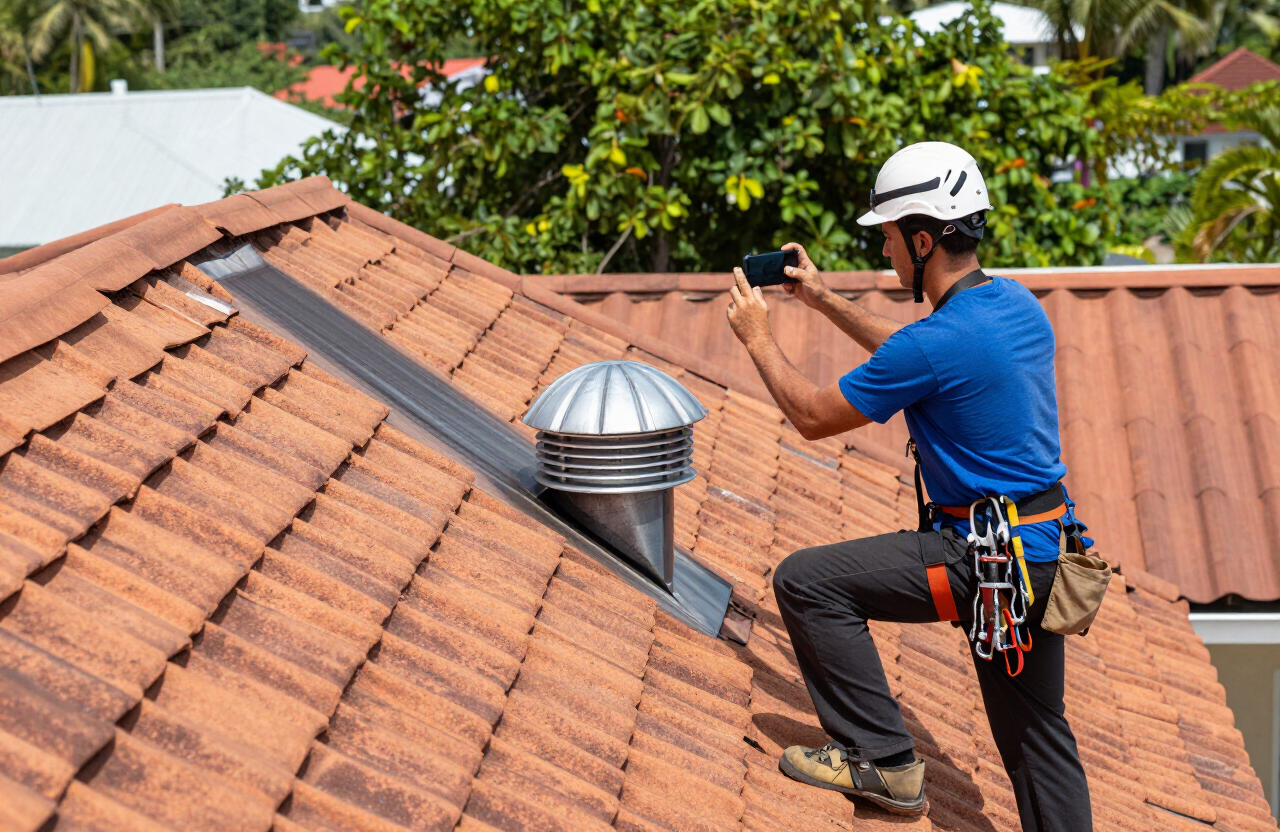
- Failed flashing around vents and chimneys. The metal and sealant where the roof meets a pipe, a chimney, or a wall is where most leaks live. UV cracks the sealant; the flashing lifts; water walks straight in.
- Ponding on flat roofs. Flat and low-slope roofs that don’t drain properly hold water over seams and fasteners until the membrane gives up. Ponding is the number-one reason flat roofs fail early here.
What a proper repair includes
When we repair a leak we don’t just stop the drip — we restore the roof’s ability to shed water the way it was built to. That means matching tiles where we can rather than replacing whole sections, replacing corroded fasteners with coastal-rated equivalents, rebuilding flashings properly instead of drowning them in sealant, and checking the area around the repair so we’re not leaving the next failure two feet away. You get photos of what we found and what we did.
Same-week response and emergency tarping
An active leak damages more than the roof — it soaks insulation, warps ceilings, and grows mould in our humidity. We aim for same-week response on repairs. If water is coming in right now, we can carry out emergency tarp-and-secure to stop the damage while we schedule the permanent fix. During and after hurricane season the backlog builds fast, so the sooner you send your request, the sooner you’re on the list.
Not sure whether a leak means repair or replacement? Read our honest guide to roof replacement, see typical roof repair costs in the Bahamas, or if a storm caused it, start with hurricane roof damage.
Got a leak? Don’t let it spread.
Request a free assessment for same-week response — we’ll trace the leak to its real source and fix it properly.